
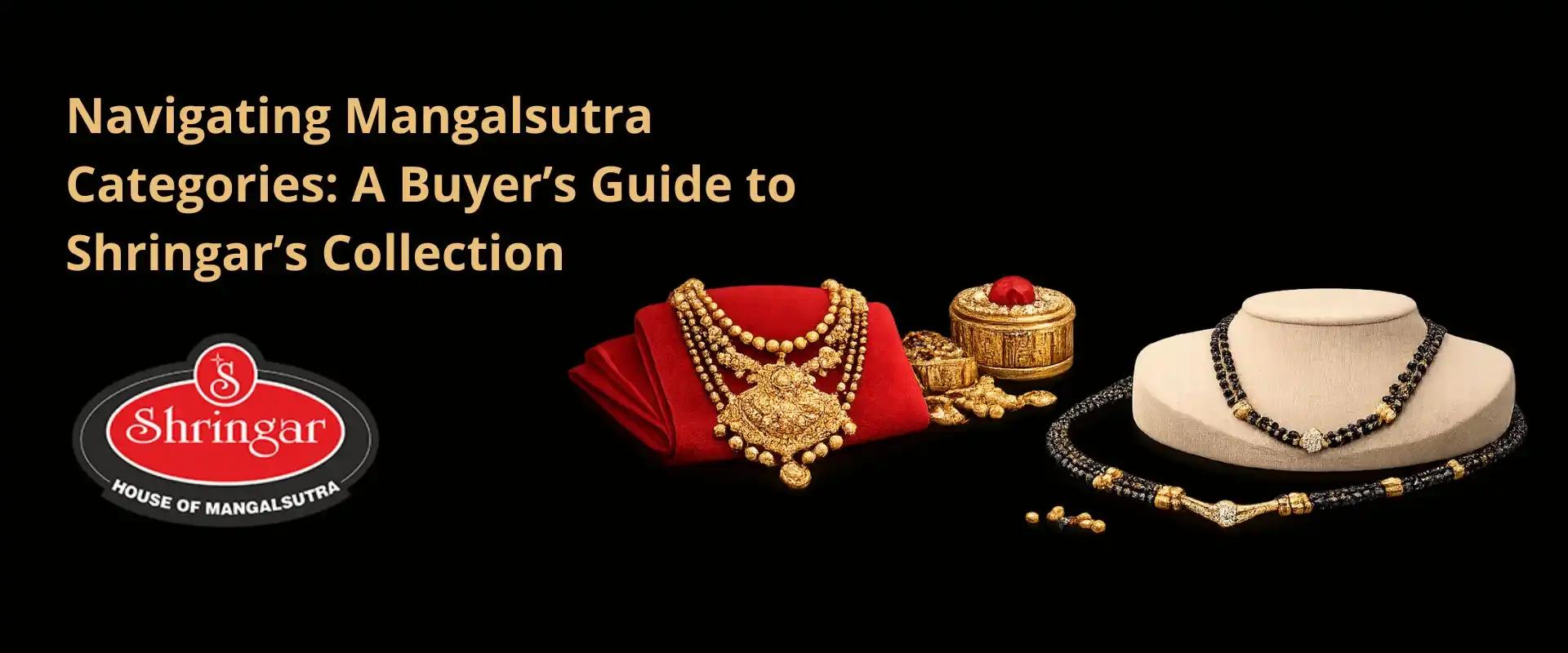
Navigating Mangalsutra Categories: A Buyer’s Guide to Shringar’s Collection
Sourcing jewellery often feels like digging through a haystack. In a mixed catalogue, a heavy traditional piece and a lightweight daily chain can look deceptively similar on a screen, yet they serve completely different customers. For a retailer, mixing them up isn’t just an aesthetic error it’s an inventory risk.
When categories are vague, decision-making stalls. You need to know instantly if a SKU is a high-margin wedding centerpiece or a volume-driving office staple. Shringar’s platform solves this by organizing inventory by wearability and purpose. This structure is a form of commercial risk mitigation by clearly segmenting products, we align design intent with the end customer's wearing context ensuring the product you stock actually fits the lifestyle you are selling to.
Material Focus: Purity and Weight
The catalogue splits broadly by material focus: metal-heavy vs. stone-heavy.
Gold-First Designs
Buyers looking for investment value prioritize weight. The gold mangalsutra designs in our specific 24K Shuddh Collection cater to this segment. Unlike standard market offerings, this specialized line highlights high-purity gold elements, appealing to clients who view jewellery as a tangible asset.
Stone-Accentuated Designs
In contrast, diamond mangalsutra designs prioritize brilliance over metal weight. These listings offer a lighter aesthetic, creating a distinct visual tier for modern consumers who want sparkle without the bulk. When reviewing a mangalsutra with price considerations in mind, these lighter, stone-focused pieces often offer a different margin structure compared to heavy gold items
Design Variety: Long vs. Short Formats
As explored in our guide to trending mangalsutra designs , length is the fastest way to categorize intended use for your customer base.
- Long Mangalsutra Design: These are commonly positioned for weddings or formal occasions. Their visual prominence and heavier chains make them the "anchor" pieces of a bridal collection.
- Short Mangalsutra Designs: Conversely, the collection features lighter profiles designed for daily use or professional attire. These are volume drivers, often purchased for anniversaries or casual wear.
Buyer Checklist: Evaluating Suitability
Use this checklist to quickly assess if a specific design fits your inventory needs:
- Pendant-Chain Balance: Does the pendant overpower the chain? Heavier pendants need sturdier chains for durability.
- Bead Spacing: In black bead designs, tight spacing offers a traditional rigid look. Spaced-out beads offer a modern, flexible drape.
- Setting Type: Buyers often consider bezel-style settings for designs intended for frequent wear due to their smoother visual profile compared to prong settings.
- Chain Gauge: Verify the thickness supports the intended wear frequency (daily vs. occasional).
Emerging Opportunities: The Hand Mangalsutra
Catalogues are expanding beyond the neckline, and the smartest inventory shift right now is the wrist. The hand mangalsutra design is not just a "bracelet format"—it is a bridge to a younger demographic.
As detailed in our deep dive on Hand Mangalsutras, this category appeals to the modern working woman or Gen Z bride who wants cultural connection without the weight of a necklace. For retailers, this is a strategic "add-on" category: it sits at an accessible price point and captures the latest mangalsutra design trends, appealing to customers who might otherwise skip a heavy gold purchase.
Quick Guide: Matching Buyer Needs to Categories
| Buyer Need | Suitable Design Category |
|---|---|
| Daily professional wear | Short mangalsutra designs |
| Wedding or ceremonial use | Long mangalsutra design |
| High-purity investment | 24K Shuddh Collection |
| Alternative to neckwear | Hand mangalsutra design |
Conclusion
Effective buying requires looking beyond the sparkle to understand the structure of a collection. Shringar’s catalogue segments the market clearly, from heavy gold pieces to modern hand mangalsutras. For buyers managing scale, clear segmentation often matters as much as the design itself.
You can contact the team to discuss specific catalogue requirements or bulk availability.